
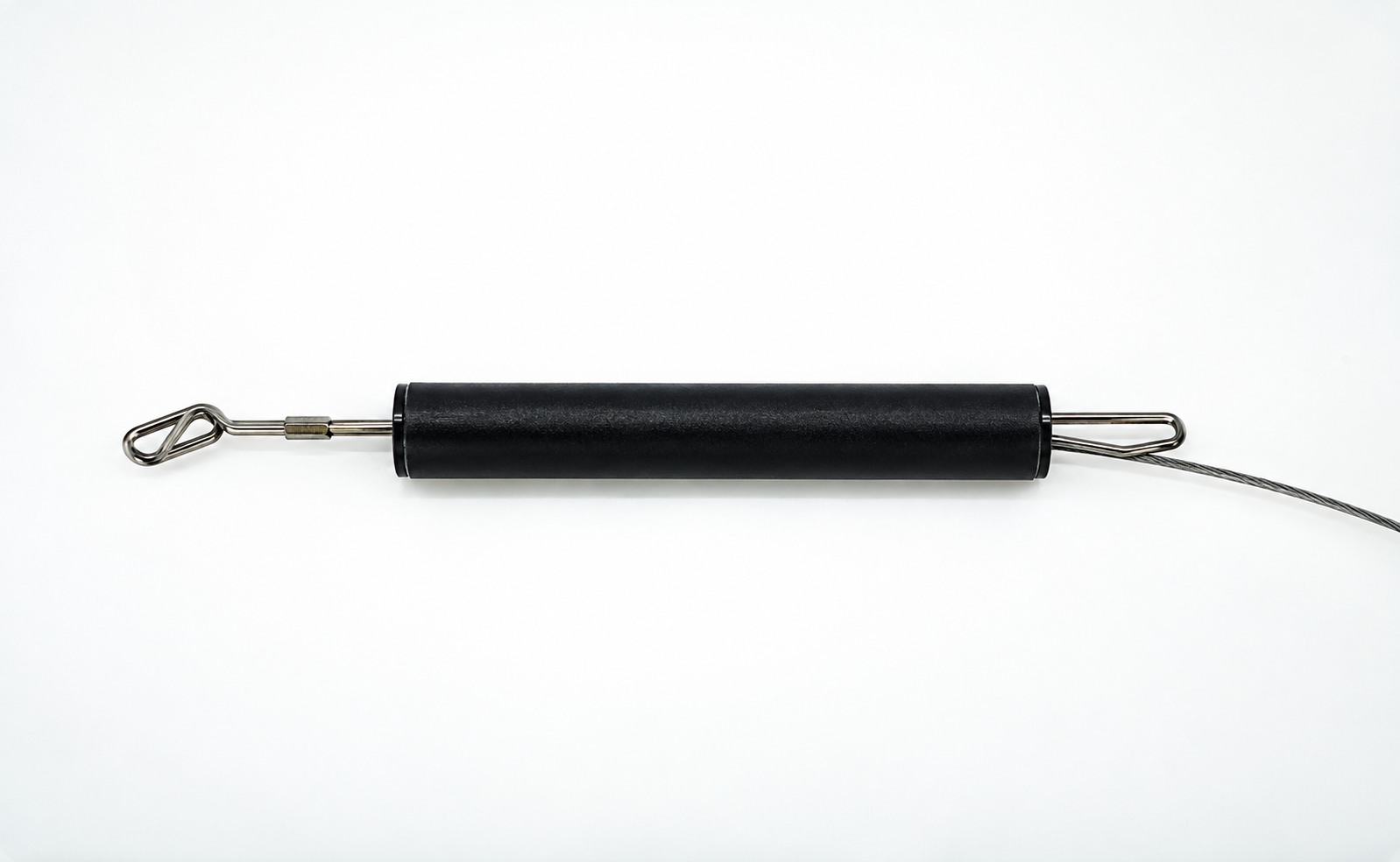
The Under Water Towed Body Load Sensor is designed to record the towing
load of submerged bodies during towing tests. It senses and records the
hydrodynamic load developed on the towed body while operating underwater.
The sensor is installed on the towing line and is designed to measure the
load generated during the towing of submerged bodies. Different load ranges
are available to accommodate different experimental requirements.
The sensor is positioned on the towing line connecting the towing system
and the submerged body. As the body is towed through the water, the
hydrodynamic load developed on the body is transmitted through the towing
line and sensed by the load sensor.
The resulting towing load can be recorded for analysis of the hydrodynamic
behaviour of the submerged body during the towing test.
The sensor is designed to sense and record the hydrodynamic load developed
on a submerged body during towing. The recorded load data can be used for
evaluating the towing behaviour and hydrodynamic characteristics of the
tested model.
The load sensor is designed to work underwater while installed on the
towing line. This allows the hydrodynamic load to be measured directly
during submerged-body towing experiments.
The sensor is available in different load ranges to accommodate various
towing-test requirements. The brochure specifies available ranges from
2 kg to 50 kg.
The sensor is installed on the towing line of the submerged body. This
arrangement allows the hydrodynamic load generated during towing to be
sensed and recorded as the body moves through the water.
The Under Water Towed Body Load Sensor is suitable for experimental
towing tests where hydrodynamic loads on submerged bodies need to be
measured and recorded.
Tell us what you need to measure, where it will be deployed and the application. Our team can help identify an existing EMCON solution or discuss a custom-developed system.