
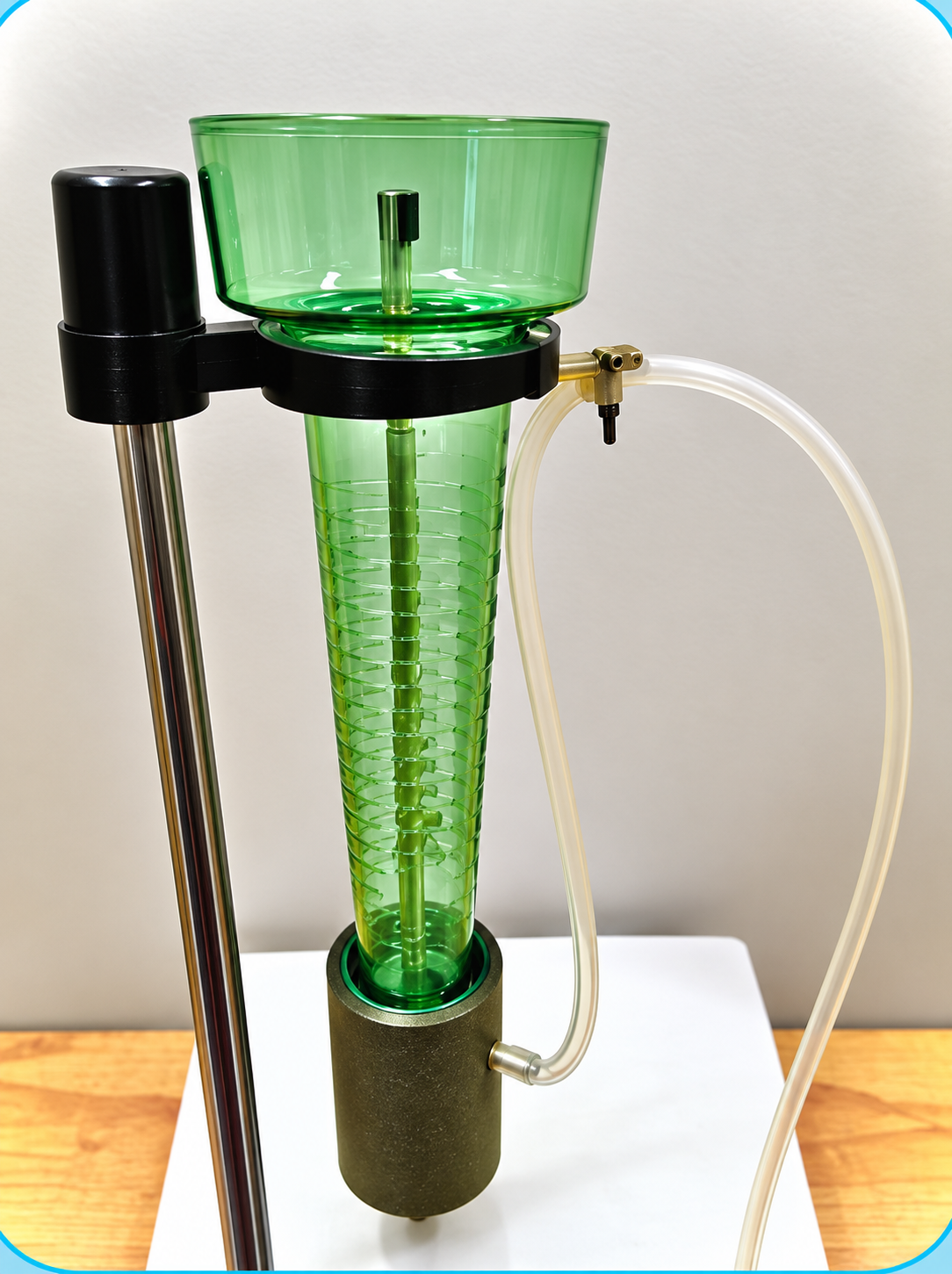
The Precipitation Gauge is designed to collect and measure rainfall
accurately using solid-state sensing technology. Unlike conventional
tipping-bucket or weighing gauges, the system operates without moving
parts.
An integrated signal-conditioning circuit converts the raw capacitance
value into a calibrated analog voltage output proportional to cumulative
precipitation.
The precipitation gauge uses a capacitive transducer to detect the
collected rainfall. The raw capacitance measurement is processed by
an integrated signal-conditioning circuit.
The circuit converts the capacitance value into a calibrated analog
voltage output proportional to the cumulative precipitation.
The sensor uses a capacitive transducer for precipitation measurement.
The capacitive sensing method eliminates the moving mechanical parts
normally found in conventional tipping-bucket or weighing gauges.
An integrated signal-conditioning circuit converts the raw capacitance
value into a calibrated analog voltage output. The output voltage is
proportional to the cumulative precipitation measured by the gauge.
The sensor does not account for changes in water level caused by
evaporation. This feature contributes to accurate and reliable
precipitation measurement according to the product specification.
The precipitation gauge has no moving parts and is designed to be
maintenance free. Its solid-state construction reduces the mechanical
components associated with conventional rainfall gauges.
The standard output is a linear 0 to 5.00 VDC signal. A digital output
can also be provided on request.
Tell us what you need to measure, where it will be deployed and the application. Our team can help identify an existing EMCON solution or discuss a custom-developed system.