Product

Precipitation Gauge

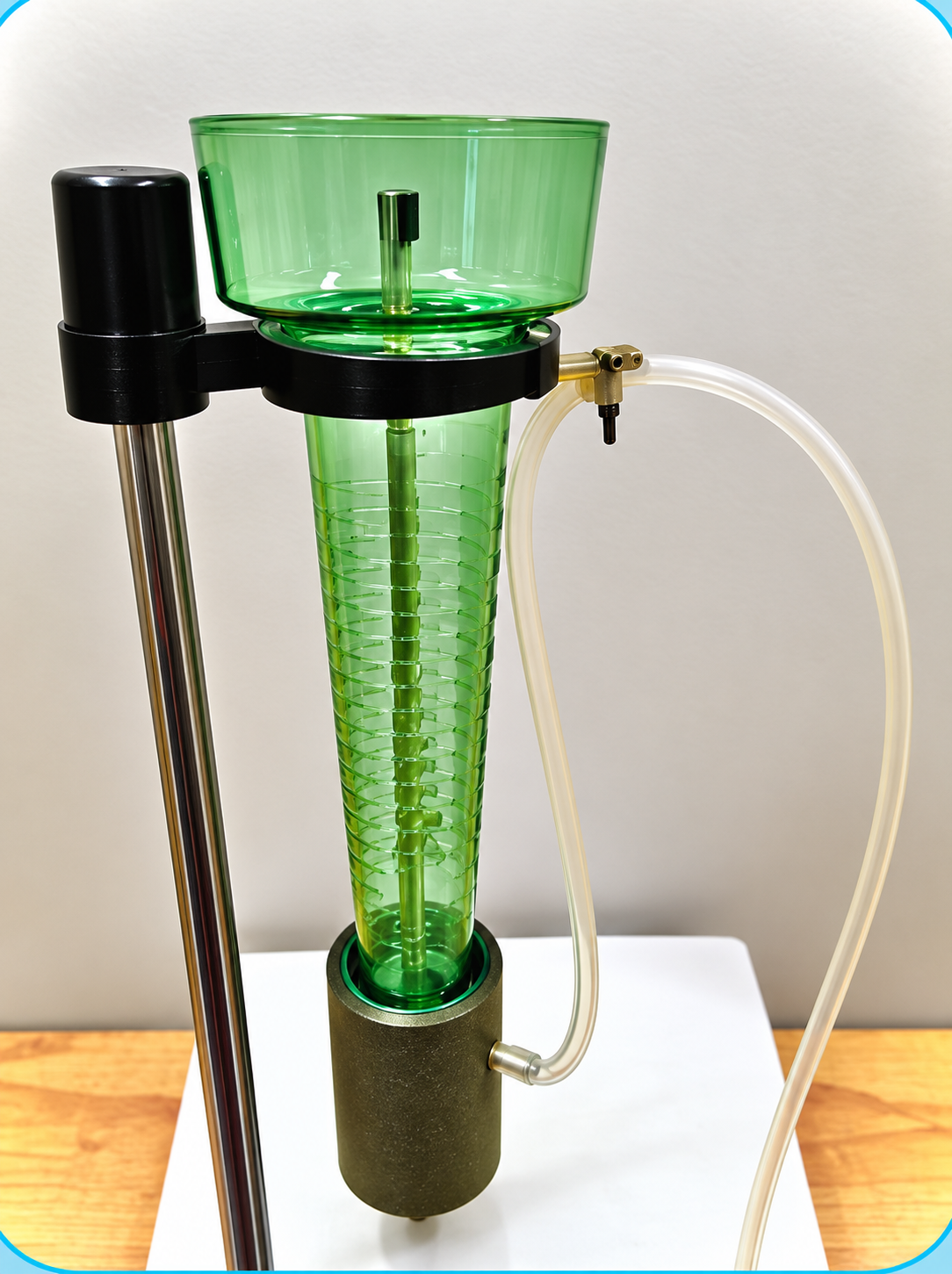
Solid-state precipitation gauge designed to accurately collect and measure rainfall using capacitive sensing technology with no moving parts.
The Precipitation Gauge is designed to collect and measure rainfall accurately using solid-state sensing technology. Unlike conventional tipping-bucket or weighing gauges, the system has no moving parts. An integrated signal-conditioning circuit converts the measured capacitance into a calibrated analog voltage output proportional to cumulative precipitation.

Overview

The Precipitation Gauge is designed to collect and measure rainfall
accurately using solid-state sensing technology. Unlike conventional
tipping-bucket or weighing gauges, the system operates without moving
parts.

An integrated signal-conditioning circuit converts the raw capacitance
value into a calibrated analog voltage output proportional to cumulative
precipitation.

Key Features

  • Solid-state precipitation measurement
  • No moving parts
  • Maintenance-free design
  • Capacitive transducer sensing
  • Accurate rainfall measurement
  • Linear 0 to 5.00 VDC output
  • Digital output available on request
  • Low current consumption
  • Fast drainage through siphon
  • Designed for reliable precipitation measurement

Measurement Principle

The precipitation gauge uses a capacitive transducer to detect the
collected rainfall. The raw capacitance measurement is processed by
an integrated signal-conditioning circuit.

The circuit converts the capacitance value into a calibrated analog
voltage output proportional to the cumulative precipitation.

Applications

  • Rainfall measurement
  • Precipitation monitoring
  • Weather monitoring stations
  • Environmental monitoring
  • Automatic rainfall data acquisition
  • Research and experimental precipitation measurement

Special Advantages

  • No moving parts
  • Maintenance free
  • Solid-state sensing technology
  • Accurate and reliable measurement
  • Calibrated voltage output

Capacitive Sensing

The sensor uses a capacitive transducer for precipitation measurement.
The capacitive sensing method eliminates the moving mechanical parts
normally found in conventional tipping-bucket or weighing gauges.

Signal Conditioning

An integrated signal-conditioning circuit converts the raw capacitance
value into a calibrated analog voltage output. The output voltage is
proportional to the cumulative precipitation measured by the gauge.

Electrical Configuration

  • Red: Positive — any voltage above 8 volts and up to 15 volts
  • Black: Negative
  • Green: Output — 0 to 5 volts

Special Features

The sensor does not account for changes in water level caused by
evaporation. This feature contributes to accurate and reliable
precipitation measurement according to the product specification.

Physical Specifications

  • Rain Collector Mouth Width: 795 mm
  • Volume of Rain Water Collected in a Single Go: 2293.76 mm

Maintenance

The precipitation gauge has no moving parts and is designed to be
maintenance free. Its solid-state construction reduces the mechanical
components associated with conventional rainfall gauges.

Output Options

The standard output is a linear 0 to 5.00 VDC signal. A digital output
can also be provided on request.

Monitor up to 32 sensor channels simultaneously, with real-time recording, graphical monitoring and wave-data analysis from a single system.

Technical Specifications

Sensor Type
Capacitive transducer
Measurement Range
0–2294 mm precipitation
Output Signal
0–5.00 VDC linear
Digital Output
Available on request
Accuracy
±1 mm
Funnel Diameter
795 mm
Operating Voltage
8–15 VDC
Current Consumption
12 mA typical
Drainage Siphon Time
≤25 seconds
Collector Mouth Width
795 mm
Collection Volume
2293.76 mm
Case Studies

Engineering in action.

Munambam–Alappuzha Tidal Study

10 Stations
2 Parameters
Coastal Study

Manimalayar River Hydrodynamic Monitoring System

4 Parameters
River Study
Thiruvalla

ONGC Underwater Measurement System

10 Channels
30m & 60m
5 Parameters

Bay of Bengal Ocean Thermal Wave Study

120 Metres
Multi-Channel
Bay of Bengal