Product

Shock / Vibration and Displacement of Ocean Platform Forms / Structures

High-speed non-contact sensor system for recording displacement, shock, and vibration of model ocean platforms and structures during vibration and wave-flume experiments.
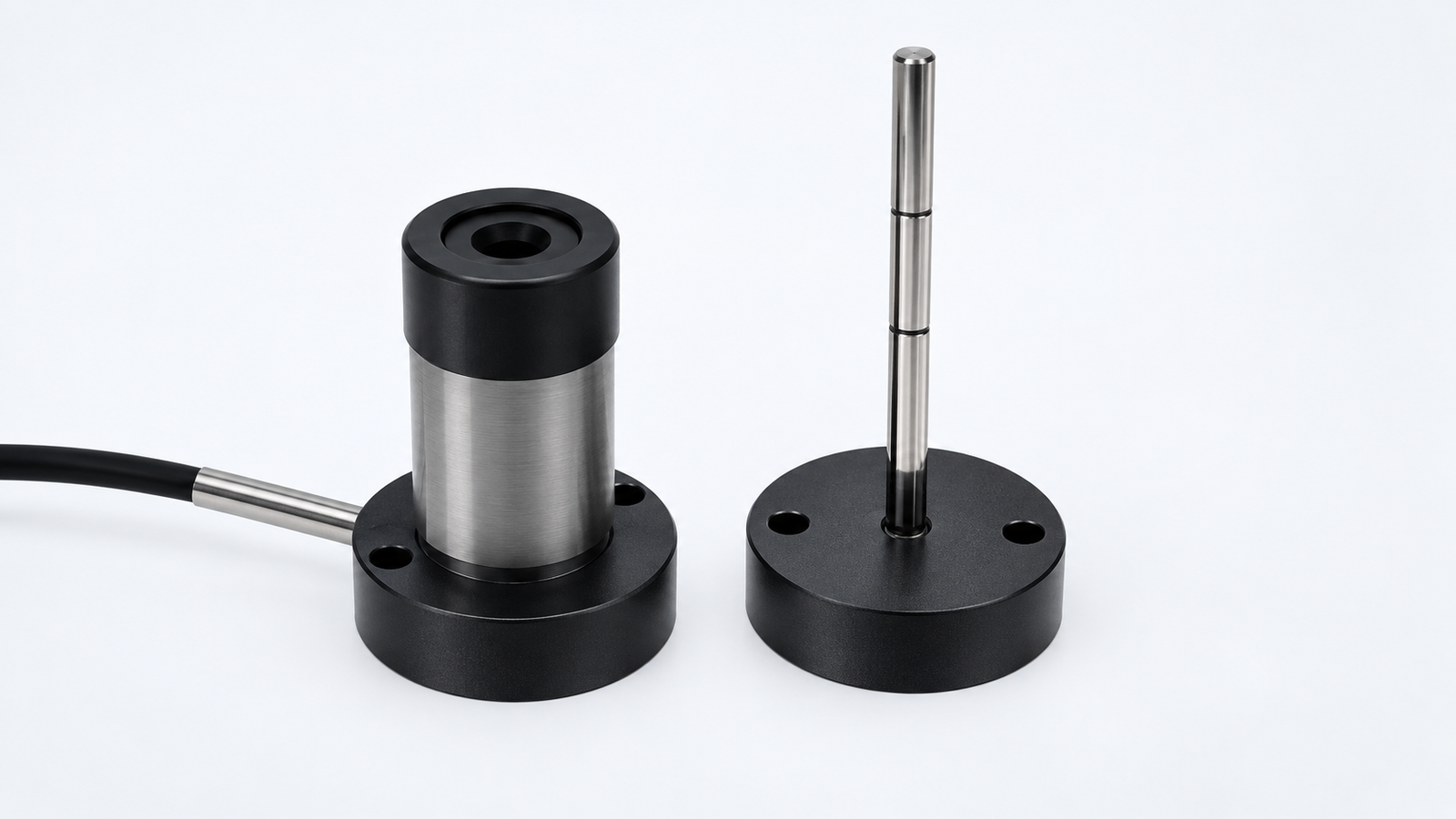
The Shock / Vibration and Displacement Sensor system is designed for recording the movement and vibration of model platform structures subjected to vibration tests. Its high-speed, non-contact electro-inductive pickup sensor can detect physical movement and vibration of structures and is suitable for analyzing objects such as piles and plates mounted on suspended or rigid brackets. The system can detect shock and vibration in two perpendicular axes for detailed experimental analysis.

Overview

The Shock / Vibration and Displacement Sensor system is designed for
recording the shift, vibration and displacement of model structures
subjected to vibration tests. It is suitable for experimental studies
of ocean platform forms, structures, piles and plates.

The system uses a high-speed, non-contact electro-inductive pickup sensor
to sense physical movement and vibration of the platform or structure.
This allows researchers to analyze structural behaviour during vibration
and wave-related experiments.

Key Features

  • High-speed movement and vibration sensing
  • Non-contact electro-inductive pickup sensor
  • Designed for displacement measurement
  • Suitable for shock and vibration measurement
  • Can analyze platform and structural movement
  • Suitable for suspended and rigidly mounted structures
  • Can detect vibration in two perpendicular axes
  • Suitable for model structure vibration tests
  • 15-metre cable

Measurement Capabilities

The system is designed to record physical movement, displacement and
vibration of model structures. It can be used to study the behaviour
of structures such as piles and plates mounted on suspended or rigid
brackets.

Shock and vibration of the tested structures can be detected in two
axes that are perpendicular to each other, providing information about
structural movement during experimental testing.

Sensor Technology

The system uses a high-speed, non-contact electro-inductive pickup sensor.
The non-contact sensing arrangement allows physical movement and vibration
of the structure to be detected without direct mechanical contact with
the moving structure.

Applications

  • Ocean platform model studies
  • Structural vibration testing
  • Shock measurement
  • Displacement measurement
  • Vibration analysis of model structures
  • Studies involving piles and plates
  • Wave flume experiments
  • Hydrodynamic model studies

Structural Testing

The sensor system can be used to analyze the behaviour of model structures
during vibration tests. It is suitable for structures mounted either on
suspended brackets or rigidly mounted brackets.

Two-Axis Vibration Detection

The system can detect shock and vibration of pillars and structures in
two axes perpendicular to each other. This provides additional information
for analyzing movement and vibration behaviour during experimental tests.

Displacement Measurement

The sensor can measure displacement within the specified measurement
ranges and can be used to record shifts in model structures during
experimental testing.

Vibration Measurement

The high-speed sensing arrangement allows vibration and shock movements
of model structures to be recorded. The measurements can be used to
evaluate the behaviour of structures subjected to vibration tests.

Cable Configuration

  • Standard Cable Length: 15 metres
Monitor up to 32 sensor channels simultaneously, with real-time recording, graphical monitoring and wave-data analysis from a single system.

Technical Specifications

Type of Sensor
Electro-Inductive type
Range
0 to 10 mm, or −5 to 5 mm
Accuracy
±1% of the range
Response Time
Less than 0.25 seconds
Load Bearing Capacity
200% times
Material
High density plastic and stainless steel
Cable Length
15 metres
Case Studies

Engineering in action.

Munambam–Alappuzha Tidal Study

10 Stations
2 Parameters
Coastal Study

Manimalayar River Hydrodynamic Monitoring System

4 Parameters
River Study
Thiruvalla

ONGC Underwater Measurement System

10 Channels
30m & 60m
5 Parameters

Bay of Bengal Ocean Thermal Wave Study

120 Metres
Multi-Channel
Bay of Bengal