
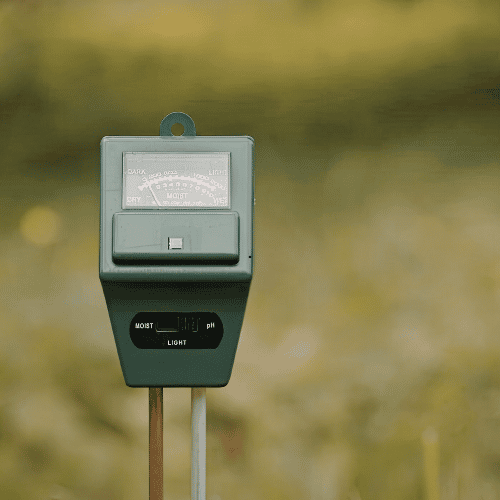
Water availability in the soil can change significantly across time, location and growing conditions. For agricultural monitoring, relying only on visual inspection or occasional manual checks may not provide a clear picture of how soil moisture is changing throughout the day.
Continuous soil-moisture measurement provides direct information about the wetness of the soil and can support applications such as precision farming, precision irrigation, soil science, agro-meteorology and hydro-meteorology. EMCON specifically lists these as application areas for its capacitance-based soil wetness and moisture sensor. EMCON SOIL MOISTURE SENSOR
For farmers, researchers and agricultural institutions, this makes soil moisture an important environmental parameter to monitor alongside weather and crop conditions.
What Is Soil Moisture Monitoring?
Soil moisture monitoring is the measurement of the amount of moisture or wetness present in soil.
Instead of depending only on periodic manual observations, a soil-moisture sensor can remain installed in the soil and provide measurements continuously.
EMCON’s Capacitance Based Soil Wetness-Moisture Sensor, Model EMC-SW-M-22, is designed for continuous observation directly in soil or engineered soils. The sensor provides an instantaneous wetness/moisture percentage and is designed to detect small changes in moisture over time. EMCON SOIL MOISTURE SENSOR
Why Continuous Monitoring Matters
Soil conditions are not static.
Moisture can change due to irrigation, rainfall, drainage, temperature and the surrounding environmental conditions. A single reading only describes the soil at one particular moment.
Continuous monitoring makes it possible to observe how the soil changes over time.
According to EMCON’s product documentation, the EMC-SW-M-22 is designed for remote and long-term operation, with low power consumption and good repeatability. EMCON SOIL MOISTURE SENSOR
This makes continuous soil-moisture measurement particularly useful where researchers or operators need repeated observations rather than isolated readings.
1. Supporting Precision Farming
Precision farming is based on understanding conditions at the field level rather than treating every part of an agricultural area in exactly the same way.
Soil moisture is one of the parameters that can contribute to this approach.
EMCON lists precision farming as one of the primary applications of its soil wetness and moisture sensor. EMCON SOIL MOISTURE SENSOR
By monitoring soil wetness directly, users can build a clearer record of how moisture conditions change in the area being studied.
Rather than relying only on assumptions about the soil, measurements provide actual field data that can be used as part of a broader precision-agriculture monitoring system.
2. Supporting Precision Irrigation
Irrigation is another major application identified in EMCON’s soil-moisture sensor documentation.
Knowing whether the soil is relatively wet or dry gives the operator information that can support irrigation-related decisions.
The EMC-SW-M-22 provides measurements across a documented 0 to 100% range, allowing soil wetness to be observed continuously rather than only at selected intervals. EMCON SOIL MOISTURE SENSOR
For precision irrigation applications, this type of continuous monitoring can help provide a clearer understanding of how soil responds before and after irrigation.
3. Understanding Changes After Irrigation or Rainfall
One of the useful aspects of continuous monitoring is the ability to observe change.
For example, when irrigation or rainfall occurs, the sensor can continue measuring the soil rather than requiring someone to return to the field and manually collect another sample.
EMCON describes the sensor as being designed to detect slight changes in moisture with excellent repeatability. EMCON SOIL MOISTURE SENSOR
This characteristic can be useful in studies where the rate and pattern of soil wetting or drying are important.
4. Soil Science Applications
Soil-moisture measurement is also relevant to research.
EMCON specifically lists soil science among the applications for the sensor. EMCON SOIL MOISTURE SENSOR
Researchers may need to observe soil wetness continuously while studying different soils, environmental conditions or agricultural practices.
An important feature documented for the EMC-SW-M-22 is that it can be used with different soils, making it suitable for a range of soil-monitoring applications. EMCON SOIL MOISTURE SENSOR
5. Agro-Meteorology and Hydro-Meteorology
Weather observations describe what is happening in the atmosphere, but agricultural conditions are also affected by what is happening below the soil surface.
EMCON lists both agro-meteorology and hydro-meteorology as applications of its soil-moisture sensor. EMCON SOIL MOISTURE SENSOR
When soil moisture is monitored alongside parameters such as:
- Air temperature
- Relative humidity
- Rainfall
- Solar radiation
- Wind conditions
the soil measurement adds another layer of environmental information.
This is particularly relevant in monitoring systems designed to study the relationship between atmospheric conditions and the soil environment.
How a Capacitance-Based Soil Moisture Sensor Works
EMCON’s EMC-SW-M-22 uses a capacitive sensing method.
The product documentation identifies the sensor as:
Type: Capacitive
Measurement range: 0 to 100%
Accuracy: Less than 2%
Repeatability: Within 1%
Resolution: 0.1% EMCON SOIL MOISTURE SENSOR
The sensor provides a linear 0 to 5 V output, allowing it to be integrated into suitable monitoring or data-acquisition systems. EMCON SOIL MOISTURE SENSOR
Designed for Remote Monitoring
Agricultural and environmental sensors are often installed away from laboratories or control rooms.
For this reason, the ability to transmit measurements over a cable can be important.
EMCON states that its soil-moisture sensor can be connected using a long cable for remote and centralised measurements. EMCON SOIL MOISTURE SENSOR
Its low power requirement also makes it suitable for long-term monitoring applications.
The documented power supply range is 5 V to 12 V, while the sensor output is 0 to 5 V. EMCON SOIL MOISTURE SENSOR
Compact Sensor Design
The EMC-SW-M-22 is also relatively compact.
The documented physical specifications are:
- Width: 4 cm
- Length: 12 cm
- Weight: Less than 200 grams EMCON SOIL MOISTURE SENSOR
Its small size allows it to be installed directly in the soil without requiring a large measurement assembly.
Key Specifications at a Glance
| Parameter | Specification |
|---|---|
| Sensor Type | Capacitive |
| Measurement Range | 0–100% |
| Accuracy | <2% |
| Repeatability | Within 1% |
| Resolution | 0.1% |
| Operating Temperature | -50°C to 95°C |
| Output | 0–5 V |
| Power | 5–12 V |
| Width | 4 cm |
| Length | 12 cm |
| Weight | <200 g |
Specifications are based on EMCON’s EMC-SW-M-22 product documentation. EMCON SOIL MOISTURE SENSOR
Where Soil Moisture Monitoring Can Be Used
Based on EMCON’s documented applications, the sensor can support:
- Precision farming
- Precision irrigation
- Soil science
- Agro-meteorology
- Hydro-meteorology EMCON SOIL MOISTURE SENSOR
The same measurement can therefore be useful in both practical agricultural monitoring and research-oriented applications.
Soil Moisture as Part of a Larger Monitoring System
Soil moisture becomes even more useful when it is considered alongside other environmental parameters.
For example, an agricultural monitoring system may include:
Soil Moisture + Air Temperature + Relative Humidity + Rainfall + Solar Radiation + Leaf Wetness
Each parameter describes a different part of the growing environment.
Soil moisture specifically tells the user what is happening in the soil, making it an important complement to atmospheric measurements.
Better Monitoring Starts with the Right Parameter
Precision agriculture depends on observing the conditions that actually affect the field.
Soil moisture is one of those fundamental parameters.
Continuous measurement can provide a clearer picture of changes in soil wetness over time and support applications ranging from precision irrigation and soil science to agro-meteorological research.
For this reason, selecting a sensor with suitable range, repeatability, long-term stability and remote-monitoring capability is an important part of building an effective agricultural measurement system.
Need to monitor soil moisture in your application?
EMCON develops indigenous sensors and measurement systems for agricultural, meteorological and environmental applications. Share your soil type, monitoring requirement and deployment conditions to discuss a suitable solution.
